
News
Djemima Mulonda, Welcome!
Undergraduate student, Djemima Mulonda, will join the Wang Lab as a researcher to work on the nutrients and organoids projects. Djemima is a junior majoring in Food Science with a minor in Chemistry. She is a newly selected McNair Scholar for the 2025 cohort. Welcome!
Biomimetic Materials to Fabricate Artificial Cells
Congratulations to the team! In this Chemical Reviews, we have reviewed the development of cell and bionic strategies and focused on the efforts of bottom-up strategies in artificial cell construction. Different from starting with existing living organisms, we have also discussed the construction of artificial cells based on biomimetic materials, from simple cell scaffolds to multiple compartment systems, from the construction of functional modules to the simulation of crucial metabolism behaviors, or even to the biomimetic of communication networks. All of them could represent an exciting advance in the field. In addition, we will make a rough analysis of the bottlenecks in this field. Meanwhile, the future development of this field has been prospecting. This “Biomimetic Materials to Fabricate Artificial Cells” may bridge the gap between materials engineering and life sciences, forming a theoretical basis for developing various life-inspired assembly materials.

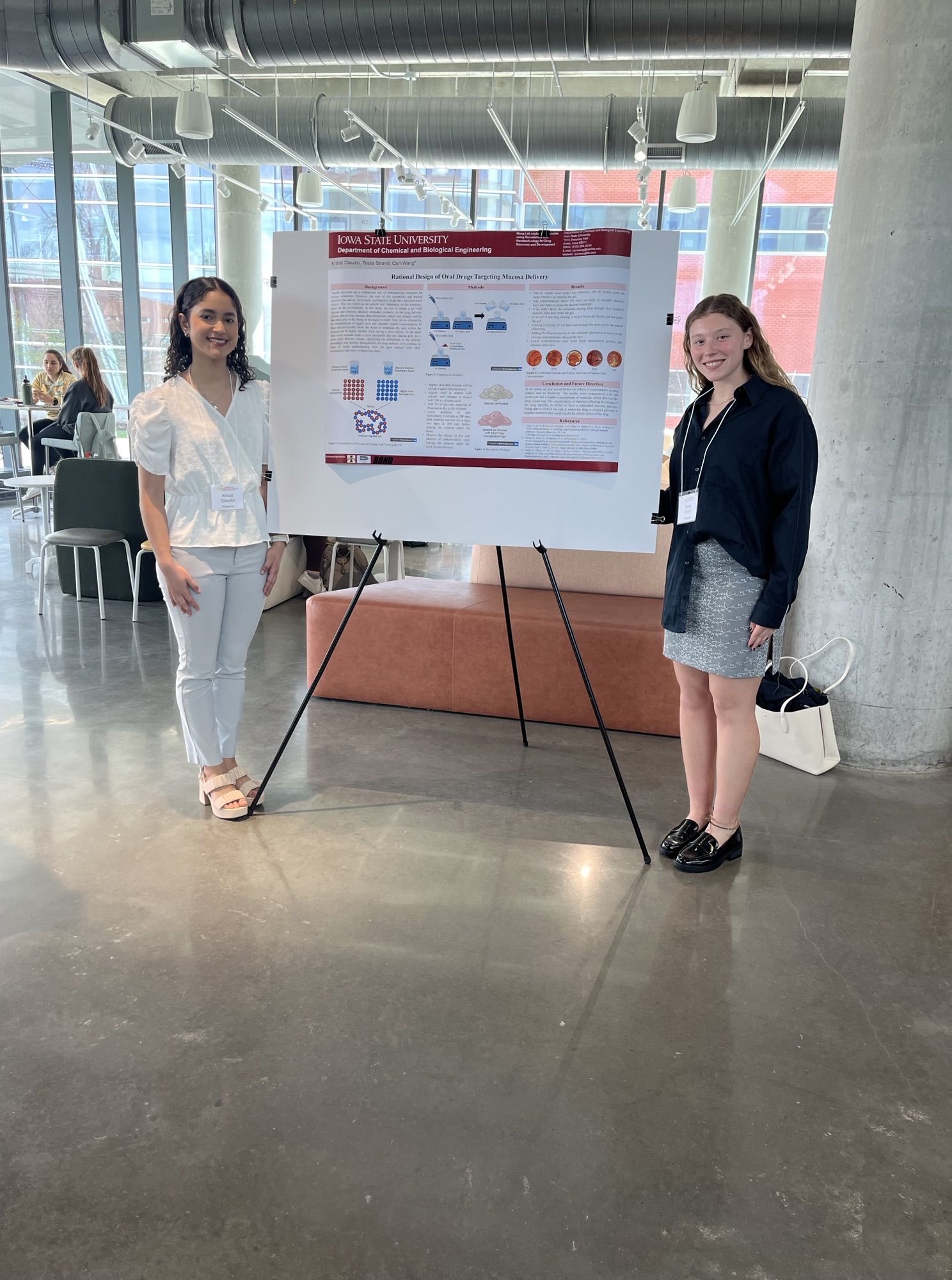
Kristal & Tessa Present at the 2024 ISU Honor Symposium
Today, two undergraduate research students from Wang Lab, Kristal Claudio & Tessa Strand, presented in the 2024 ISU Honor Program Symposium poster session. They have worked on the “Rational Design of Oral Drugs Targeting Mucosa Delivery” project. Congratulations!
New publication in Biofabrication
Working with our former lab member, Dr. Haisheng Peng, we published a new paper in Biofabrication. In this new manuscript, “3D Printing Processes in Precise Drug Delivery for Personalized Medicine”, we systematically introduce the applications of 3D Printing technologies in the pharmaceutical industry and summarize the virtues and shortcomings of each technique. Biofabrication is the leading journal focusing on cutting-edge research in biomanufacturers, biological systems, and therapeutic products. Congratulations to the team!

Welcomes to Dr. Tong and Kristal!
Dr. Tianjian Tong joined Wang Lab as a postdoctoral fellow; he will work on organoids, cell-mediated drug delivery, and oral vaccines and drugs targeting the intestinal mucosa. Kristal Claudio joined Wang Lab as an Honor undergraduate researcher to work on the oral drug delivery project. Welcome!
Study Transportation of Drugs within Colon Organoid Systems
In our recent plication in Advanced Biology, “Study Transportation of Drugs within Newly Established Murine Colon Organoid Systems,” we demonstrated a new concept of using colon organoids as tools for high-throughput drug screening, toxicity testing, and oral drug development. Congratulations to the students and collaborators. Of course, we appreciate the support from NIBIB!

Rational design of oral drugs with gut organoids
In our new publication, “Rational design of oral drugs targeting mucosa delivery with gut organoid platforms,” on Bioactive Materials, we rationally designed artificial virus nanoparticles as oral drug delivery vehicles (ODDVs). The ODDVs (with PLL-σ1) significantly improved delivery efficiency, which was evaluated on gut organoid-derived mucosal models. We demonstrated that the M cell was a vital factor in the oral delivery efficiency of the ODDVs. This project has been supported by the National Institute of Biomedical Imaging and Bioengineering (NIBIB) Trailblazer Award.

Organoids
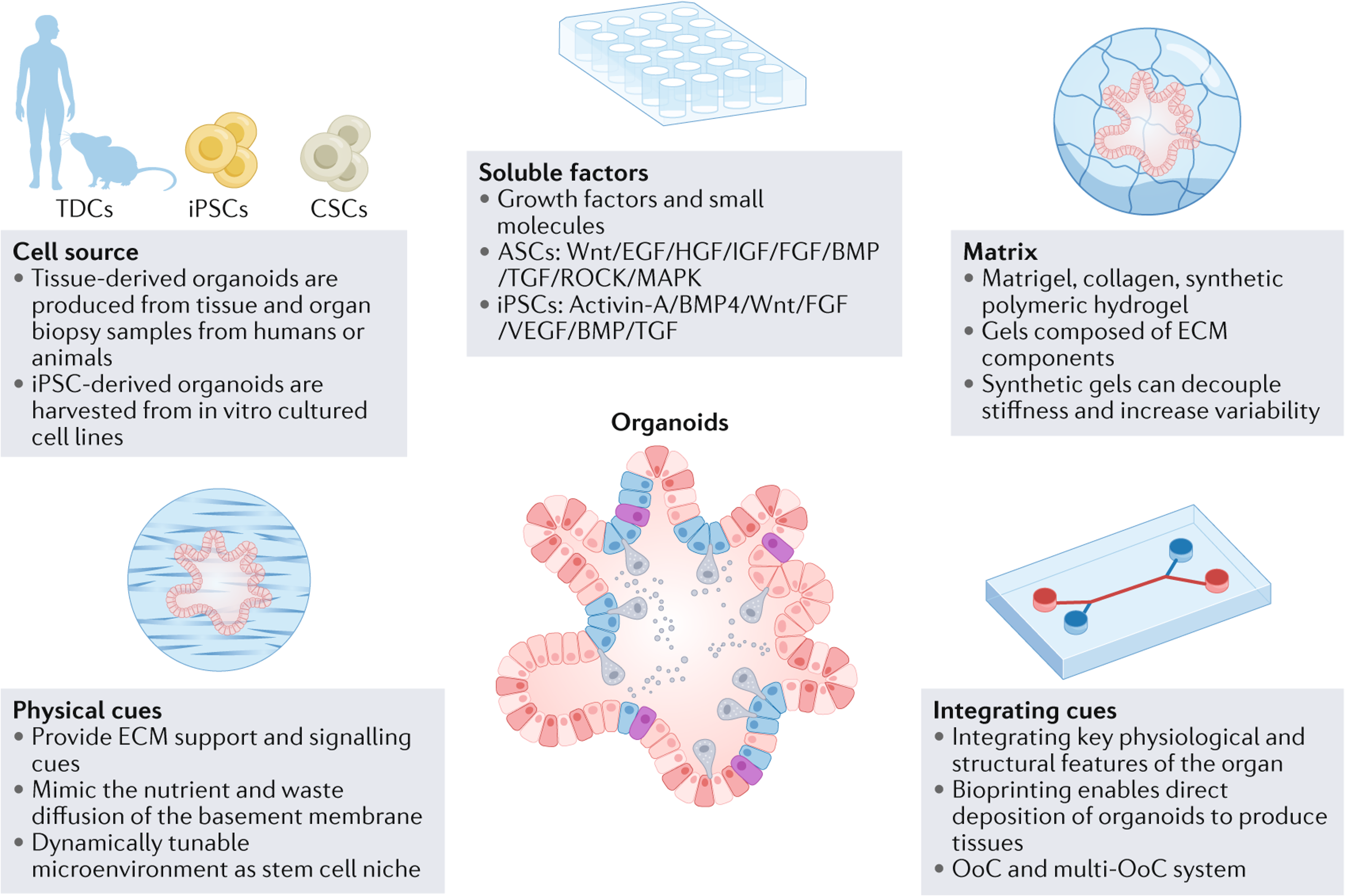
in the new paper, “Organoids“, published in Nature Reviews, Dr. Wang and other leaders in organoid research highlight the rationale underlying the establishment of organoid cultures and provide guiding principles for selecting suitable materials, methods, and protocols for different applications. The critical considerations for generating robust organoids have been further discussed, such as those related to cell isolation and seeding, matrix and soluble factor selection, physical cues and integration (see Graphic Abstract below), as well as the general standards for data quality, reproducibility and deposition within the organoid community. It is a good resource for Methods and Protocols if you want to make organoids by yourself.
NIBIB Trailblazer Award
Dr. Wang has been awarded the National Institute of Biomedical Imaging and Bioengineering (NIBIB) Trailblazer Award. This generous support from NIBIB will help Wang Lab to explore new oral drugs to treat inflammatory and infectious diseases using organoid platforms.

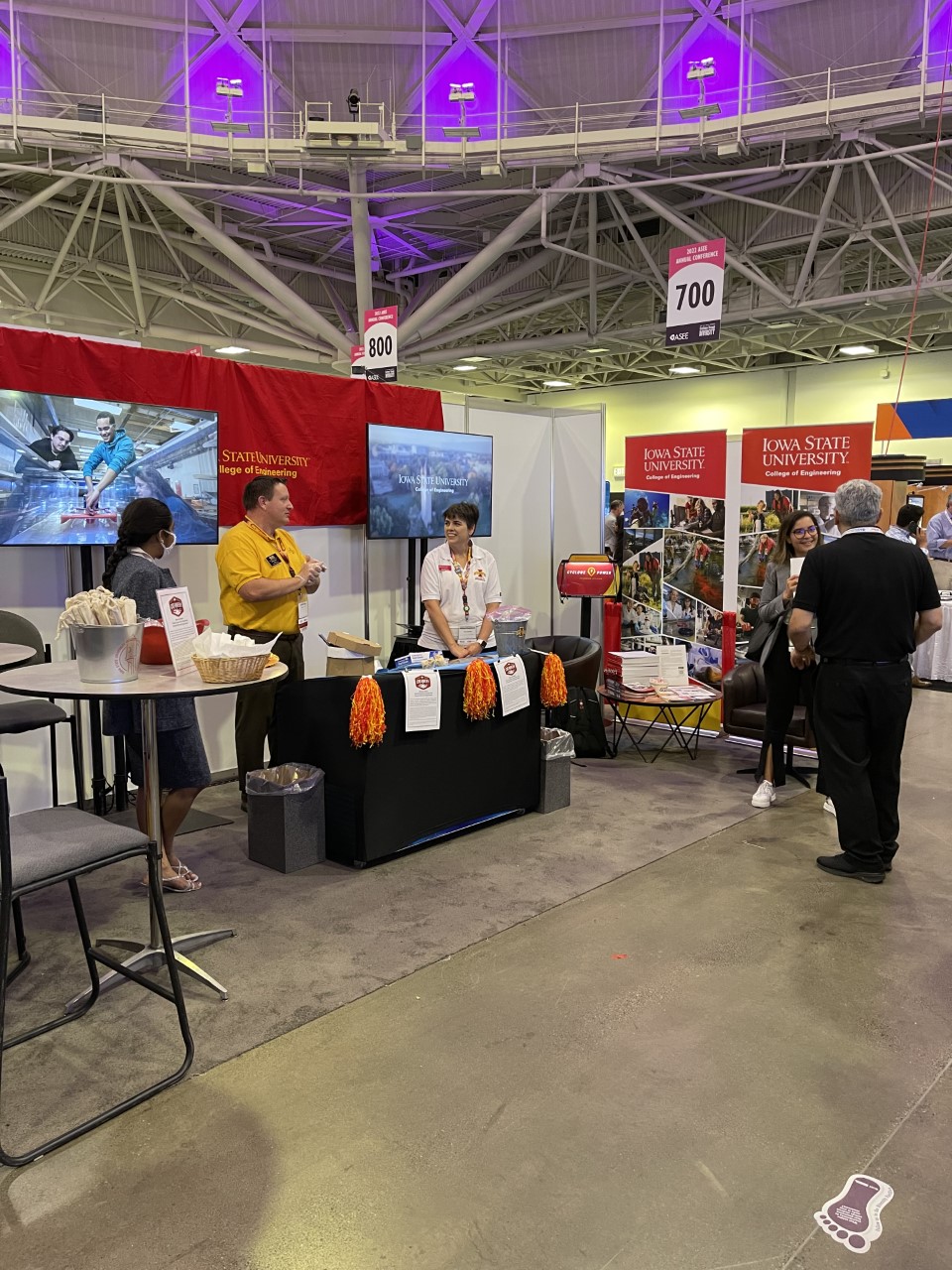
ASEE 2022 Annual Conference
Dr. Wang participated in the American Society for Engineering Education (ASEE) 2022 Annual Conference. As the sponsor of ASEE, ISU had various sessions and programs. A lot of fun!

 Wang Lab